Scroll Down to Win: Why Webtoons Are Eating Manga's Lunch With Younger Readers
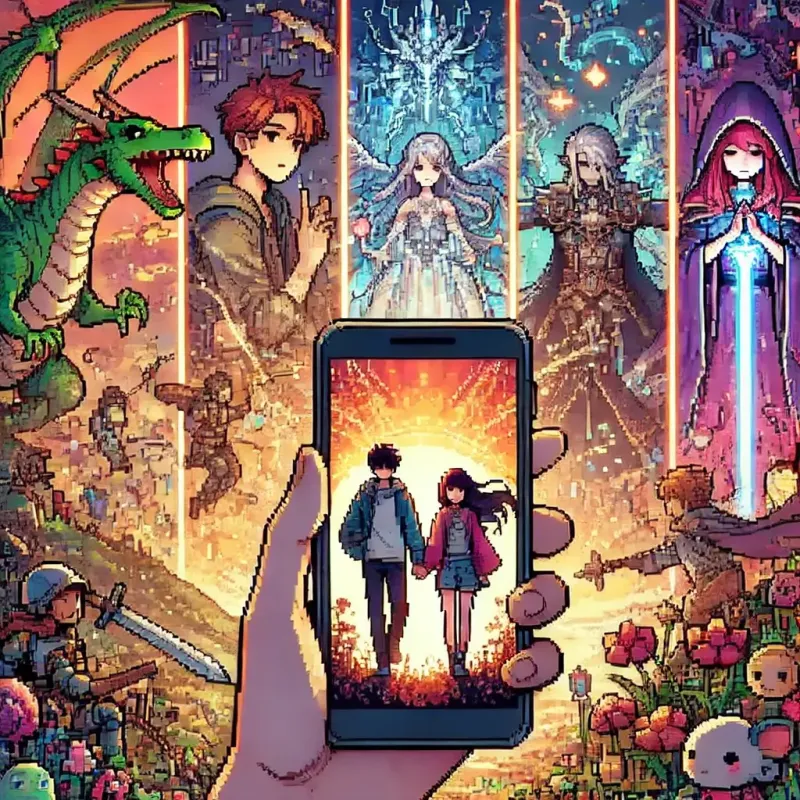
Photo: person scrolling webtoon comic on smartphone colorful digital art, via kj.nomardy.com
Walk into any Barnes & Noble right now and the manga section looks healthier than it has in years. Shelves are stocked, new titles keep arriving, and series like Jujutsu Kaisen and Demon Slayer have crossover recognition that would've seemed impossible a decade ago. By every traditional publishing metric, manga in America is thriving.
So why does it feel like something is quietly shifting underneath all that success?
The answer has a lot to do with a format that doesn't require a bookstore at all.
What Even Is a Webtoon?
If you're not already deep in this world, here's the quick version: webtoons are digital comics designed to be read on a phone by scrolling vertically, panel by panel, in full color. They originated primarily in South Korea — the platform LINE Webtoon launched in 2004 and essentially invented the format as we know it — but creators from Japan, the US, and everywhere else have adopted the style.
The reading experience is fundamentally different from manga. There's no right-to-left page orientation to learn. No physical book to buy or store. No waiting for a publisher to localize a series from Japanese. You open an app, you find something that looks interesting based on a thumbnail and a genre tag, and you start scrolling. The barrier to entry is basically zero.
For a teenager with a smartphone and fifteen minutes between classes, that's not a minor convenience. That's a completely different relationship with comics.
The Audience That's Changing Everything
Here's where it gets genuinely interesting for anyone paying attention to where American pop culture is heading. The core webtoon audience skews younger and significantly more female than traditional manga readership. Platforms like WEBTOON report that a substantial portion of their US users are between 13 and 24, and the genre breakdown reflects that — romance, fantasy, and slice-of-life dominate in ways that mirror what's popular on platforms like TikTok and Tumblr.
These readers aren't necessarily replacing manga with webtoons. Many consume both. But their primary comics habit, the thing they check every week when a new episode drops, is increasingly a webtoon rather than a physical volume they purchased at a store.
For publishers, that's a problem that doesn't show up in current sales figures but absolutely will in five to ten years when today's 16-year-olds are the ones with disposable income and buying habits.
Why Traditional Manga Has a Format Problem
Manga's physical format is, in many ways, its greatest strength and its biggest liability at the same time. There's a tactile pleasure to reading a well-printed volume. The right-to-left reading style feels natural once you've learned it, and for dedicated fans it's become part of the cultural identity of engaging with Japanese comics. Collecting volumes is a genuine hobby with its own satisfactions.
But for someone who has never read manga before, all of that is friction. Learning the reading direction. Figuring out which volume to start with. Paying $12 to $15 for a single volume that might take 20 minutes to read. Waiting months or years for a series to be fully translated and published. These are real obstacles that the webtoon format simply doesn't have.
Webtoons are also episodic in a way that fits modern consumption patterns perfectly. New chapters drop weekly, often for free with optional paid fast-pass options. That rhythm — check in every week, read a bite-sized update, discuss it online immediately — maps directly onto how younger audiences already engage with streaming shows, YouTube creators, and social media content.
Publishers Are Scrambling, and It Shows
The major manga publishers aren't oblivious to what's happening. Viz Media, Yen Press, and others have been making moves to establish or expand their digital presences, and there's been genuine investment in apps and platforms designed to compete with WEBTOON and Tapas. The results have been... mixed.
The challenge is that building a webtoon platform isn't just about digitizing existing manga. It requires cultivating original creators who work in the vertical-scroll format, building discovery tools that help readers find new series, and developing the kind of community features that keep users coming back daily. That's a fundamentally different business than licensing Japanese properties and printing physical volumes.
Some publishers have started acquiring webtoon studios and properties outright, essentially trying to buy their way into the format rather than develop it organically. Whether that strategy pays off remains genuinely unclear. Platform loyalty in the webtoon space is real, and WEBTOON's head start is substantial.
The Japanese Angle Nobody Talks About
Here's a wrinkle that complicates the simple "Korean webtoons vs. Japanese manga" narrative: Japan has its own vertical-scroll digital comics ecosystem, and it's enormous. Platforms like Piccoma and MangaPlaza have been translating and distributing Japanese webtoon-style content to international audiences, and the format has been growing within Japan itself as publishers adapt to mobile-first reading habits.
So the competition isn't purely national. It's partly a format war happening within Japanese comics culture too, as traditional manga publishers figure out how to compete with digital-native vertical comics that Japanese readers are increasingly choosing on their phones.
For American fans, this means the webtoon category is going to get more complicated and more interesting. More Japanese creators are working in the vertical format. More Korean webtoons are getting anime adaptations — Tower of God, The God of High School, Noblesse — which creates a feedback loop where webtoon readers discover anime and anime fans discover webtoons.
So Is Manga Actually Dying?
No. Let's be real about that. The current sales numbers are strong, the fandom is massive, and physical manga has a cultural staying power that isn't going away because an app exists. Series with dedicated fanbases will keep selling volumes for years.
But "not dying" and "not changing" are different things. The demographics of who's forming new comics habits, and how they're forming them, are shifting in ways that favor the webtoon format. Manga's dominance in the American comics market isn't ending tomorrow — but the era when it was the only serious option for fans of Asian sequential art? That's already over.