The Western Fan Effect: How American TikTok Is Quietly Rewriting Anime
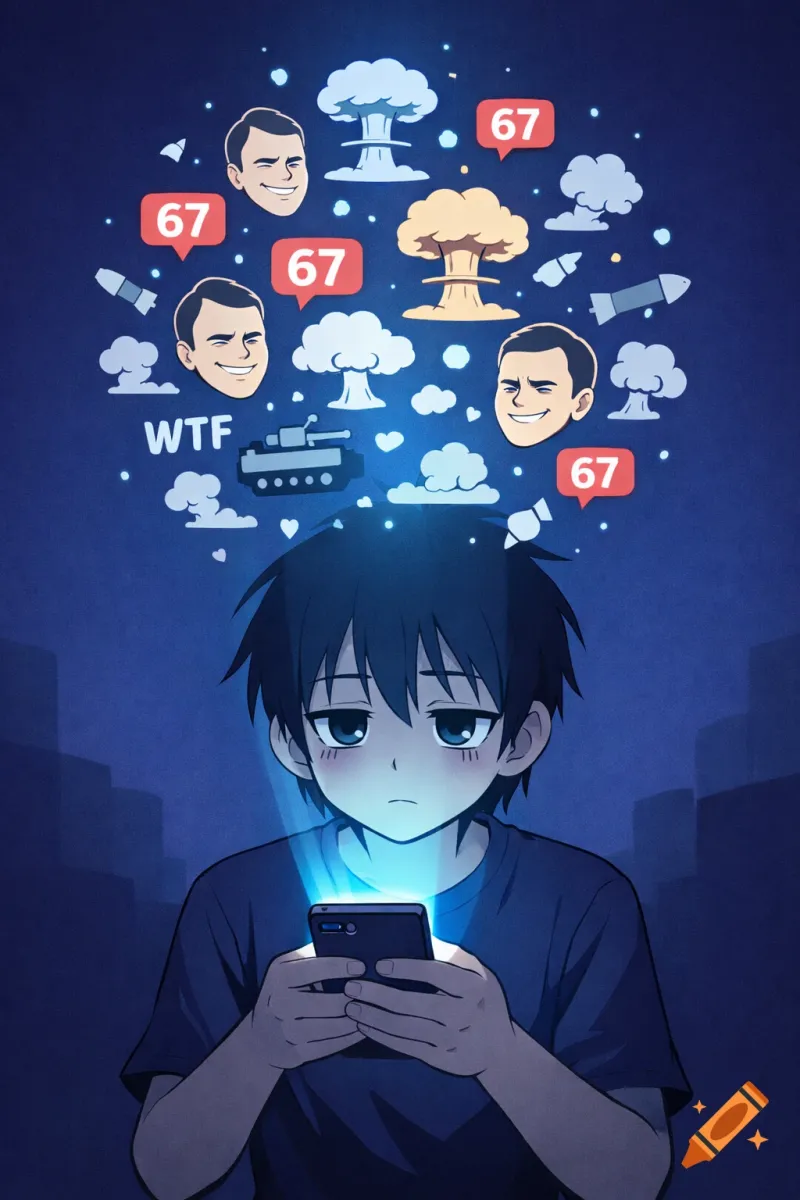
Photo: person watching anime on phone social media TikTok scrolling, via media.craiyon.com
Picture this: a mid-tier isekai drops on Crunchyroll, gets a lukewarm reception in Japan, but absolutely detonates on American TikTok. Fan edits rack up millions of views. A side character becomes a meme. Suddenly that character is getting a lot more screen time in later episodes, and a spinoff manga gets greenlit featuring them prominently.
Coincidence? Maybe. But it's happening often enough that calling it a pattern feels more accurate than calling it luck.
The Algorithm Has No Borders
Here's the thing about streaming data: it doesn't care about geography. When a show premieres globally on a major platform, the engagement numbers — watch time, rewatch rates, clip sharing, search spikes — flow back to rights holders and sometimes directly to production committees in Japan. American fans, simply by watching and talking and posting, are generating data that lands on desks in Tokyo.
This is genuinely new. Even ten years ago, Western fan reactions lived mostly on forums and YouTube comment sections — visible, sure, but not packaged into clean analytics dashboards. The streaming era changed that. Now the signal is cleaner, faster, and harder to ignore.
Several industry analysts who track international licensing trends have noted that production committees — the groups of publishers, toy companies, and studios that actually fund most anime — are increasingly factoring in projected international performance when deciding what gets made and how.
Case Study: The Character That Fandom Saved
Without naming names (studios are understandably cagey about admitting Western fans influenced their creative decisions), there are multiple documented cases of character trajectories shifting mid-production based on international reception.
A supporting character in a popular action series was originally slated for a limited arc. Fan communities in the US went absolutely feral for them — cosplay, fan art, entire TikTok accounts dedicated to their moments. By the time the show's second cour was in production, that character had a substantially expanded role. The official reason given? "The story naturally developed that way."
Sure it did.
Similar dynamics have played out with character design tweaks between seasons, tonal shifts in shows that were perceived as too dark or too slow for international streaming audiences, and merchandise decisions that clearly reflect what's selling outside Japan.
Studios Are Watching — More Than They'll Admit
Some studios are more open about this than others. Smaller outfits with strong international licensing revenue have been relatively candid in trade interviews about monitoring Western social media. Larger, more traditional studios tend to publicly maintain the line that their creative decisions are purely driven by Japanese market considerations.
But people who work in localization and international distribution tell a different story. "The social listening is real," one localization producer told us. "Studios have people — or they contract people — who are tracking what's trending in Western fandom. Whether that information influences production is a case-by-case thing, but the data is being collected."
Platforms like Crunchyroll, which now has millions of American subscribers and significant influence over what gets licensed and promoted, openly use engagement data to inform their own acquisition strategies. That shapes which shows get visibility, which shapes which shows become hits, which shapes what gets greenlit next. It's a feedback loop with a lot of steps, but the loop is real.
The Authenticity Question
Okay, but here's where it gets complicated — and where fan communities are genuinely divided.
Is anime that's been shaped by Western audience preferences still authentically Japanese? Or does the global feedback loop produce something that's neither fully Japanese nor fully catered to Western tastes — a kind of cultural average that satisfies no one completely?
Some fans love the idea that their enthusiasm has real influence. It feels like participation, like being part of a creative conversation rather than just a passive consumer. Others find it deeply uncomfortable. Part of what drew them to anime was its foreignness, its willingness to tell stories that American entertainment wouldn't touch, its cultural specificity.
If studios start softening edges or amplifying certain character types because Western audiences respond to them, are we getting better anime — or just more anime that looks like what we already like?
"I don't want a watered-down version," one longtime fan on Reddit put it bluntly. "I want what a Japanese creator actually wanted to make. If I wanted American sensibilities, I'd watch American TV."
It's a fair point. It's also, arguably, a fight that's already been half-lost.
The Creator Perspective Is Messier Than You'd Think
Interestingly, not all Japanese creators hate this dynamic. Some mangaka and anime directors have spoken positively about international fan reception — it's validating, it extends the life of their work, and it sometimes provides financial justification for projects that Japanese market data alone wouldn't support.
The issue is when commercial pressure from international markets starts overriding creative instincts. A director who wants to end a story a certain way might face pushback from a production committee that knows Western fans are expecting — and tweeting about expecting — a different outcome.
Creative compromise isn't new to any industry. But the speed and visibility of Western fan opinion makes it a more immediate and constant pressure than it's ever been.
So Where Does This Leave Us?
The relationship between American anime fandom and Japanese anime production is more reciprocal than either side usually acknowledges. US fans aren't just consuming a foreign art form — they're actively participating in its commercial ecosystem in ways that feed back into creative decisions.
That's exciting. It's also a little weird. And it's definitely worth being honest about.
The next time a character you love gets more screen time than you expected, or a show's tone shifts in a direction that feels almost suspiciously aligned with what fan Twitter was screaming for — you might not be imagining it. You might just be seeing your own reflection in the anime pipeline.
Welcome to the feedback loop. You've been in it longer than you knew.