Why the Anime Merch You Want Is Always Sold Out (And Your Shelf Is Full of Stuff You Didn't)
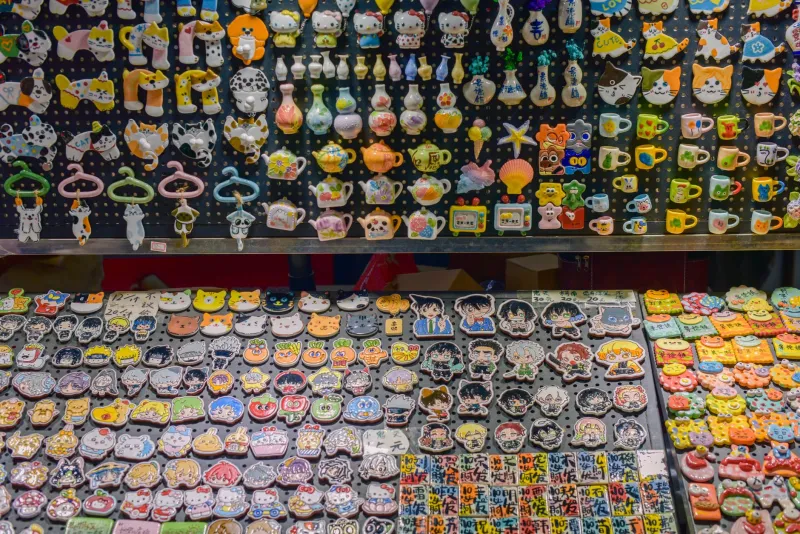
Here's a scenario that'll feel painfully familiar: You finish a series, you're emotionally wrecked, you immediately go looking for a figure of your favorite character. The search results show you a couple of bootlegs, a Funko Pop you didn't ask for, and a listing on eBay where someone wants $180 for something that originally retailed at $35. Meanwhile, every anime retailer in existence has seventeen variations of merchandise from a mid-tier show that peaked in 2017 just collecting dust on their shelves.
This is not an accident. It's not bad luck. It's the natural result of a distribution system that was never really designed with American fans in mind — and it's getting weirder, not simpler.
The Pipeline Problem Nobody Talks About
Anime merchandise doesn't start in the US. Almost all of it originates in Japan, where licensing, manufacturing, and retail are tightly controlled ecosystems. By the time a figure or a hoodie or a keycap set makes its way to a shop in the States, it's passed through a chain of licensors, importers, regional distributors, and retail buyers — each one making decisions based on their own incomplete picture of what American fans actually want.
Retailers who specialize in Japanese imports will tell you the same thing: the ordering window for a product often closes months before the show it's based on even finishes airing. That means a buyer at a US shop has to bet, sometimes a full year in advance, on whether a currently-airing anime will still have a passionate fanbase when the merch finally ships. Get it wrong in one direction and you're sitting on boxes of unsold inventory. Get it wrong in the other direction and your customers are furious because you only ordered forty units of something that sold out in an afternoon.
"The forecasting part is genuinely brutal," said one buyer at a mid-sized US anime retailer who asked not to be named. "We're making calls based on social media buzz and gut instinct. There's no clean data. And the Japanese manufacturers aren't adjusting production runs just because something blew up on TikTok in America."
Licensing Gaps and the Import Maze
It gets more complicated. Regional licensing deals mean that some merchandise legally can't be sold in the US at all — or can only be sold through specific authorized channels. A figure might be available through a Japanese retailer's international shipping option, but technically violate the terms of a North American distributor's exclusive agreement if resold. The result is a gray market that fans navigate constantly, often without realizing it.
Amazon and eBay are full of third-party sellers importing directly from Japan, which is technically legal for personal purchases but gets murky at scale. Specialty importers operate in a legal middle ground that nobody seems eager to clarify, because the moment someone does, a chunk of the market disappears.
For collectors, this means pricing is essentially random. The same figure can cost $45 from one source and $120 from another, with no obvious quality difference and no way to know which one is actually authorized for sale in your region.
The Algorithm Thinks It Knows What You Want
Here's where things get genuinely strange. Major retailers — including some of the biggest names in anime merchandise — have started leaning on algorithmic demand prediction to decide what to stock. These systems look at streaming numbers, social engagement, search trends, and historical sales data to forecast what's going to sell.
The problem is that algorithms are really good at identifying what was popular and pretty bad at predicting what's about to be popular. They're also trained on existing purchase data, which skews heavily toward the titles that were already well-distributed. Niche favorites and cult classics get systematically underordered because the data doesn't exist to justify a big buy.
The flip side is that genuinely massive franchises — your Demon Slayers, your Jujutsu Kaisens — get over-indexed to the point where even minor characters end up with extensive merch lines, while the shows that built a devoted but smaller US audience get almost nothing.
"The algorithm doesn't know about the Discord server with ten thousand people who would absolutely buy a figure from that show," noted one collector who runs a popular import-focused community online. "It just sees that the show didn't chart on Crunchyroll's trending page and moves on."
What's Actually Changing
The good news — and there is some — is that the market is starting to shift, even if slowly.
A handful of US-based companies have started working directly with Japanese manufacturers to produce officially licensed merchandise designed specifically for the Western market. These aren't bootlegs or knockoffs — they're legitimate partnerships that cut some of the traditional import chain out of the equation. The trade-off is that the product design often gets Americanized in ways that purists find annoying, but the availability and pricing tends to be far more reasonable.
Crowdfunding has also become a legitimate tool. Platforms like Kickstarter and Makeship have hosted campaigns for anime merch that would never have gotten a traditional retail run, and the model works because it solves the forecasting problem at the source — you only manufacture what people have already paid for. It's slow and the wait times can be brutal, but you actually get the thing you wanted.
On the import side, services that act as middlemen for Japanese shopping sites have gotten significantly more user-friendly over the past few years. What used to require navigating untranslated websites and hoping your credit card would process is now a fairly streamlined experience. It's still more expensive than buying domestic, and shipping times are unpredictable, but for dedicated collectors it's become a standard part of how they shop.
The Warehouse Full of Mysteries
None of this fully explains why certain shelves at certain retailers are perpetually stocked with merchandise from properties that feel completely random — the deep-cut titles that generate genuine confusion when you see them taking up prime real estate.
The answer, usually, is that someone made a big bet on a licensing deal and it didn't pay off. The product exists, it's already been imported, and marking it down enough to actually clear it out would mean taking a significant loss. So it just... stays. For years sometimes.
It's one of the more visible symptoms of a distribution system that still hasn't figured out how to serve a Western audience that's now massive, passionate, and very online. American anime fans aren't a niche anymore — they're a genuine market force. The infrastructure just hasn't caught up.
Until it does, the hunt continues. Check the import sites. Set your alerts. And maybe make peace with the fact that sometimes the thing you want simply doesn't exist in a form you can actually buy.